
Courtney Skunda Hall
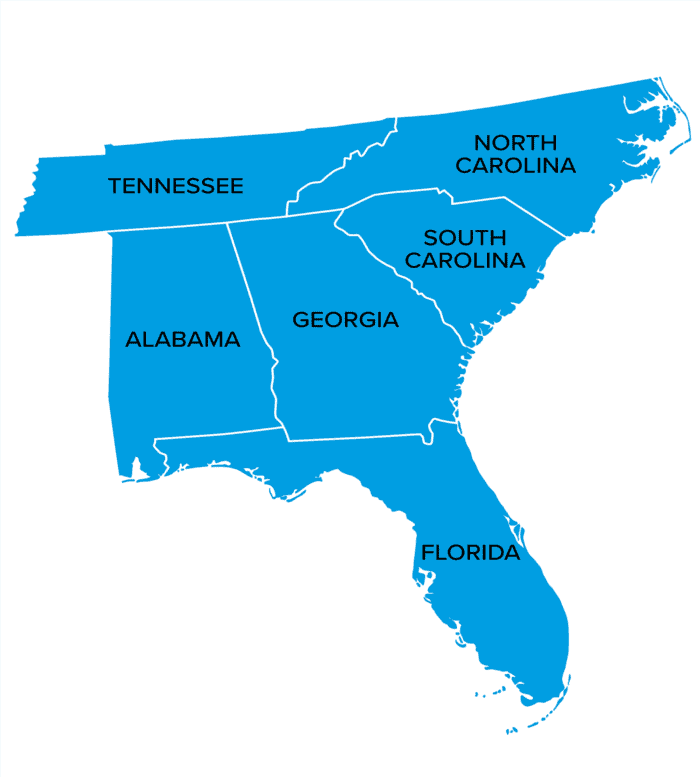
This is the best time in a generation to be involved in pharmaceutical manufacturing in the Southeast. From the Research Triangle to Metro Atlanta, from the I-85 corridor to the Gulf Coast, billions of dollars in pharmaceutical manufacturing investment are transforming this six-state region into a global pharmaceutical production hub. Economic pressures, evolving trade dynamics, and a renewed focus on supply chain resilience have created an onshoring wave that is bringing advanced manufacturing home. As a result, the Southeast is emerging as a leading region in this movement.
I have had the privilege of watching this transformation from multiple vantage points. Earlier in my career, I worked in economic development, helping recruit biotechnology and pharmaceutical companies to this region. I was part of crafting the value proposition and celebrating many new regional commitments.
Today, I lead business development and client growth strategy for BE&K Building Group, a design-build and construction management firm that has invested over 50 years building pharmaceutical facilities across the nation, with an emphasis in the Southeast. We are now busier than ever, transforming regional economic development wins into state-of-the-art manufacturing facilities.
It is an incredible time to be in this industry. Together, if we are regionally smart about one critical challenge, it is going to get even better.
The Challenge We Need to Talk About
Scaling our workforce as ambitiously as we are scaling our infrastructure.
Here is what I see every day from the construction side: the demand for pharmaceutical facilities is outpacing the ability to properly staff the project teams building them with skilled tradespeople.
I am talking about the availability of skilled pipefitters who understand high-purity systems, welders who are certified for sanitary stainless steel, electricians who can wire complex automated equipment, HVAC technicians who understand cleanroom pressure cascades, and commissioning specialists who can verify that these intricate systems work as designed. These are not general construction skills.
Pharmaceutical facilities require extraordinary precision which demands a level of craftsmanship that makes these projects both fascinating to build and challenging to staff. BE&K has built pharmaceutical facilities for over 50 years. We are extremely familiar with the available regional talent. The question remains: how does the available talent scale fast enough to match the current and future market opportunity?
Here is yet another parallel challenge: while we are working to expand the available construction workforce, our clients are racing to staff their eventual facility operations teams — engineers who can commission and validate these sophisticated facilities, technicians who understand cGMP manufacturing inside and out, and specialists in biologics, cell and gene therapies, and advanced manufacturing technologies.


For a moment, consider the timeline dynamics. A pharmaceutical facility often takes 24-36 months to design and build; but training a pharmaceutical engineer ready to operate it? That typically requires a four-year degree combined with additional on-the-job experience. The opportunity has arrived, but the traditional talent development timelines are not aligned with the current pace of capital investment.
This isn’t a crisis, but it is a challenge that can be solved together.
Building Talent Pipelines as Ambitious as Our Projects
From my background in workforce development at the North Carolina Biotechnology Center, I learned that the most successful talent initiatives share three characteristics: they’re specific, they’re collaborative, and they move fast. Here are some approaches that are working today in select locations, combined with additional creative scaling concepts.
The Construction Workforce:
What if we partnered with technical colleges to create pharmaceutical construction specialty tracks? Instead of generic welding or HVAC programs, we could offer targeted training on sanitary systems, cleanroom installation, pharmaceutical-grade HVAC, and commissioning protocols. Students could graduate with credentials that make them immediately available to work on pharma projects, commanding premium wages due to their specialized skills.
We have witnessed success recruiting from adjacent precision industries such as semiconductor fabrication, food processing, and medical device manufacturing. Skilled workers in these industries already understand cleanliness, precision, and process control. A focused bridging program could get them pharma-ready in weeks or months instead of years.
The veteran community also represents tremendous ongoing potential. Military technical backgrounds translate beautifully to pharmaceutical manufacturing because they bring discipline, attention to detail, systems understanding, and a focus on quality. What if our collective industry worked together to build structured transition programs that would develop this exceptional talent for the pharmaceutical industry?
The Operations Workforce:
What if we could embed industry professionals directly into existing university programs, co-teach courses, and ensure curriculum is current with real-world needs? Students would graduate with practical context, and companies would onboard talent who understand their technologies from Day One.
What if we developed certification pathways for technical roles that could take someone from chemical manufacturing, food processing, or medical device manufacturing and make them pharmaceutical-ready in 6-12 months? These would not be shortcuts, but smart recognition of transferable knowledge paired with focused training on pharmaceutical-specific requirements.
The Regional Opportunity:
What is most exciting is the potential for regional collaboration. Imagine shared training infrastructure across the Southeast. These could be state-of-the-art facilities where construction trades learn pharmaceutical-specific skills and facility operations personnel receive hands-on training and experience with the equipment they will encounter.
The capital investment would be modest when shared across our industry and region. The return would be transformative, providing consistent quality training, efficient use of expensive training equipment, and a talent pipeline that would serve the entire region’s growth.
This is exactly the kind of initiative where ISPE-CaSA can play a catalytic role, convening competitors to collaborate on non-competitive workforce challenges.
Beyond Projects and Headcounts
Here is what I learned from economic development: when you get workforce development right, you create a virtuous cycle.
Companies locate where talent is available. Talent moves where opportunities are exciting. Educational institutions invest where student demand is strong. Each success builds momentum for the next resulting in continuous improvement.
The Southeast is experiencing incredible momentum right now. Every new facility announcement reinforces our region’s position. Every successful project delivery builds confidence. Every worker trained strengthens our competitive advantage.
But momentum requires maintenance. We need to ensure that when companies evaluate their next manufacturing investment, the Southeast remains attractive; not only because of our business climate and infrastructure, but also because we have the proven ability to staff sophisticated pharmaceutical manufacturing projects and operations from Day One.
This competitive advantage is built project by project, partnership by partnership, and trained worker by trained worker.
What I Would Like to Explore Together
At this year’s conference, BE&K will have over 20 team members in attendance. We are genuinely excited about the momentum we are witnessing in this industry and region. We are also excited to be part of the solution as we seek to help bridge the workforce gap in both construction labor and pharmaceutical operations talent.
What has always set BE&K apart is our people and the unique experience they bring to this sector. After more than 50 years building pharmaceutical facilities across our nation and the Southeast, combined with economic development and workforce initiative experience, we have seen these challenges from multiple perspectives. We do not claim to have all the answers, but we are actively working on solutions and eager to learn from others doing the same.
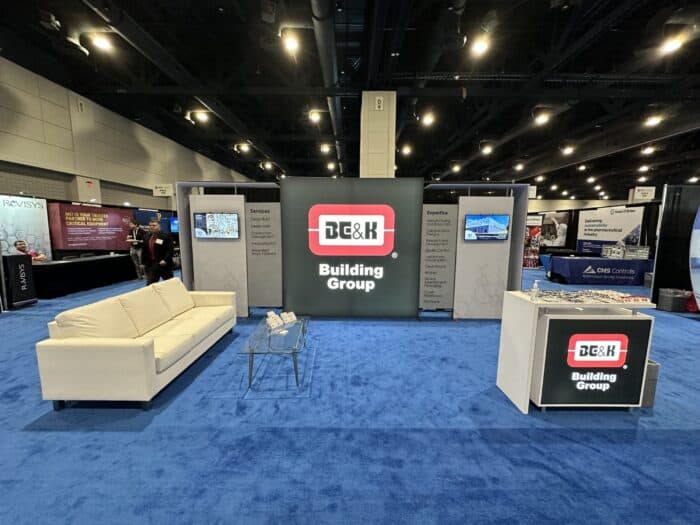
I invite you to visit BE&K’s booth at the 2026 ISPE-CaSA Tech Show in Raleigh, NC, to explore questions like:
- What construction workforce strategies are or are not working on your projects?
- How are you aligning construction timelines with operational staffing plans?
- What would regional collaboration on training infrastructure look like?
- How can we share what is working without sharing competitive advantages?
- What role should ISPE play in accelerating workforce development across both construction and pharmaceutical operations?
- How do we make pharmaceutical careers attractive to the next generation?
Even better, let’s schedule a time for a deeper conversation. BE&K’s team brings diverse experience across business development, construction management, project leadership, and engineering throughout ISPE CaSA’s six-state region and beyond. We are genuinely curious about your experiences, your innovations, and how we might collaborate together.
The Opportunity Ahead
The pharmaceutical boom in the Southeast isn’t slowing down. In fact, it is accelerating. The facilities we build represent cutting-edge manufacturing capabilities: cleanrooms that enable breakthrough therapies, automation that ensures product quality and production efficiency, and systems that protect patient safety every step along the way.
These facilities will manufacture medicines that will improve the lives of millions. They will create thousands of careers and anchor our regional economy for decades to come. But they can only achieve that potential when we have skilled tradespeople to build them correctly and talented personnel to operate them effectively.
We have the momentum. We have the investment. We have the technical capability. Now we need to ensure we have the talent strategy that matches our ambition.
I am optimistic we can get there. I have seen this industry solve complex challenges before, and I see the caliber of thinking and collaboration that takes place in organizations like ISPE-CaSA.
Let us make sure the Southeast’s pharmaceutical renaissance is remembered, not just for the billions invested in facilities, but for how we transformed workforce development to support generational growth.
That is a legacy worth building together.
Schedule a Meeting with Our Team
Visit Booth 205 at the ISPE-CaSA Tech Show on February 25, 2026, or contact Courtney.Hall@bekbg.com to schedule a conversation about workforce innovation, regional collaboration opportunities, and what BE&K is hearing in the region.
About the Author
Courtney Hall is President of the ISPE Carolina – South Atlantic Chapter, one of the largest and most active chapters in the global ISPE network, serving pharmaceutical manufacturing professionals across six southeastern states. She leads Business Development and Client Growth Strategy for BE&K Building Group, a design-build and construction management firm with over 50 years’ experience building pharmaceutical facilities across the nation and region. Previously, she worked in economic development and workforce initiatives at the North Carolina Biotechnology Center, where she helped recruit biopharmaceutical companies to North Carolina.