
Andy Greenberg
Foreign direct investment continues to play a major role in the expansion of U.S. manufacturing. Across advanced manufacturing, aerospace and aviation, food and beverage, pharmaceuticals, life sciences, and other industrial sectors, global companies are investing in American operations to improve access to customers, strengthen supply chains, reduce geopolitical risk, and position themselves for long-term growth.
Establishing your first manufacturing facility in the U.S. is a complex endeavor. Site selection, utility availability, permitting, workforce conditions, code compliance, logistics, and schedule expectations can vary significantly by state and municipality. What may appear attractive from a labor or incentive standpoint can introduce challenges in entitlement, infrastructure, constructability, and speed to market.
The Moment the Decision Gets Complicated
The United States does not have a single regulatory environment, permitting process, or construction market. It has fifty states, thousands of jurisdictions, and a complex patchwork of building codes, fire codes, environmental regulations, zoning requirements, labor markets, and incentive structures that vary dramatically from state to state and county to county.
A first U.S. facility often requires leadership teams to make decisions in an unfamiliar environment while continuing to move at the speed the business demands. Key questions that must often be addressed include:
- How do local permitting and inspection processes compare across jurisdictions?
- Will the site support energy requirements, process loads, and future expansion(s)?
- How should global facility standards be adapted to U.S. codes and construction practices?
- Are local labor markets equipped for the type of facility being planned?
- Which long-lead items could affect startup timing?
- Which construction delivery approach gives the company the best balance of speed, cost certainty, and technical coordination?
These considerations are core project drivers that influence capital approval, schedule performance, and the investment’s long-term success.
Site selection is technically complex. Choosing a location based on real estate availability, labor cost, and proximity to customers or suppliers is necessary, but incomplete. A site that looks attractive on paper may carry geotechnical conditions that significantly complicate foundation design and increase construction costs. It may not have the utility capacity to support your process demands without substantial infrastructure investment and multi-year lead times. It may sit in a jurisdiction with permitting timelines that are incompatible with your operational schedule. None of these factors are visible from a spreadsheet. They require boots-on-the-ground assessment and technical analysis before a site commitment is made.
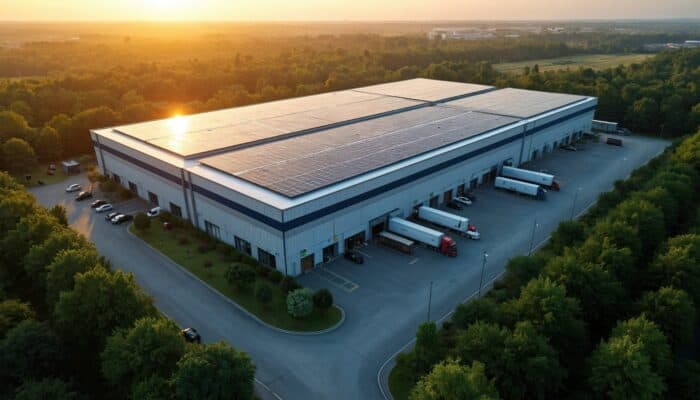
Jurisdictional complexity is consequential. The regulatory environment in which you build will shape your project in ways that go beyond the permit application itself. Local building departments vary in their experience with complex manufacturing facilities, their inspection capacity, and their familiarity with the sector-specific requirements your facility will demand. A jurisdiction that has permitted dozens of advanced manufacturing or pharmaceutical facilities will move differently and more predictably than one encountering your facility type for the first time.
Design-Build Can Reduce Friction
For first-time U.S. facility development, design-build delivery can offer significant advantages by reducing fragmentation and enabling earlier alignment among planning, design, budgeting, procurement, and construction execution.
A foreign investor typically needs more than a design team and more than a builder. They need a comprehensive partner that can help connect the business strategy to the physical asset — someone who can evaluate candidate sites, pressure-test concepts, identify schedule and cost drivers, and help translate business goals into a realistic project roadmap.
Examples of services aimed at this are order-of-magnitude budgeting, schedule development from design through commissioning, long-lead item identification, phasing strategies, site analysis, and jurisdiction variables assessment, resulting in a side-by-side comparison of options that connect technical findings to financial and operational impacts.
Long-lead procurement will affect your schedule. Transformers, switchgear, specialty process equipment, and other long-lead items have extended procurement timelines in today’s market. These are not variables that can be managed reactively. Early identification of long-lead items, procurement strategy development, and phasing decisions that account for equipment delivery windows are essential to achieving schedule certainty. They need to be addressed during the design phase, not once design is complete.
The Intelligence You Need Before You Build
At BE&K, we have developed a service framework specifically designed to address the complexity that first-time U.S. builders face. We call it Site Intelligence, and it is built around a straightforward premise: the most consequential decisions you will make about your U.S. manufacturing facility will occur long before construction begins. Getting those decisions right requires accurate intelligence, delivered early in the process.
Site and facility assessment. Before you commit to a location, we conduct a
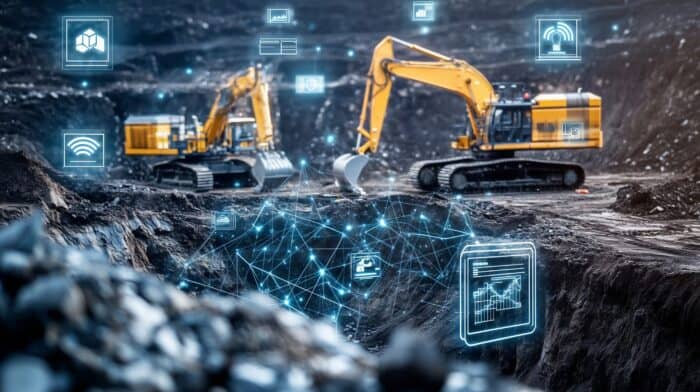
rigorous technical evaluation of your candidate sites. Assessing operational, utility, and logistics requirements against what each site can deliver. We evaluate existing buildings for adaptability, expansion potential, and code compliance. We analyze utility capacity against your process demands. We review transportation access, such as interstates, rail, ports, and airports, relative to your supply chain needs. And we identify environmental, geotechnical, and topographic conditions that will affect constructability and cost. Risk identification at this stage, such as permitting exposure, zoning constraints, and site-specific challenges, is significantly less expensive than discovering those risks after a site commitment has been made.
Jurisdiction profiling and strategy. Not all jurisdictions operate the same, so understanding the regulatory environment you are entering is critical to project success. We conduct a comparative analysis of permitting timelines, building and fire code requirements, environmental regulations, and inspection processes across your candidate locations. We evaluate local labor availability and workforce training infrastructure. And we identify jurisdictions that have prior experience with your facility type.
Site and facility test fits. Before design begins in earnest, we develop conceptual site layouts that validate your production flow, material movement, operational efficiencies, truck court requirements, and employee access needs against the physical realities of your candidate sites. We study massing and building placement, develop preliminary utility routing concepts, and model flexibility for future growth or process changes. This is the stage where mismatches between your operational vision and your physical site are identified and resolved, not during construction document development.
Budget and schedule projections. One of the most common sources of project difficulty is the gap between initial cost expectations and construction market realities. Regional pricing, labor market conditions, material costs, and the technical complexity of your facility type all shape what your project will cost and the time it will take to build. We provide order-of-magnitude cost estimates grounded in current market data, identify key cost drivers and regional pricing variables, develop preliminary schedules from design through commissioning, and identify long-lead items that need to enter procurement early. We also develop analyses that model how cost and schedule vary based on site and jurisdictional choices, giving you relevant information before you commit.
Comparative analysis of options. When you are evaluating multiple sites, jurisdictions, and facility strategies, the volume of information can become difficult to synthesize into a clear decision. We develop structured, side-by-side evaluation matrices that score your options against your defined priorities, cost, schedule, risks, logistics, and incentives to translate technical complexity into executive-level clarity. The goal is not to make the decision for you. It is to ensure that the decision you make is fully informed by the data and analysis that matters most.
Conclusion
The United States is one of the most attractive destinations for advanced manufacturing investment worldwide. The market access, workforce, infrastructure, innovative ecosystem, and policy environment all support that conclusion. Companies that get their initial U.S. manufacturing strategy right will build durable competitive advantages that extend well beyond their first facility.
Getting it right, however, requires more than capital and commitment. It requires intelligence about sites, jurisdictions, costs, schedules, incentives, and delivery strategies. It also requires a partner with the experience and capability to gather and translate that intelligence into a facility that performs as planned.
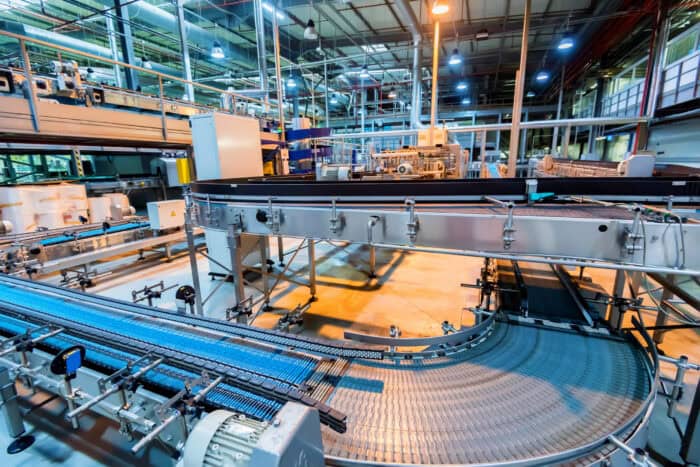
Site Intelligence services is one of the many things we do at BE&K, and we would welcome the opportunity to provide these services for you.
If you are planning a U.S. facility, begin with the right foundation. Contact Andy Greenberg with BE&K to start the conversation.